Kickball rules for adult leagues: a first-timer's guide
Pitching, pegging, force outs, coed kicking orders and all the grown-up rules nobody explains on day one.
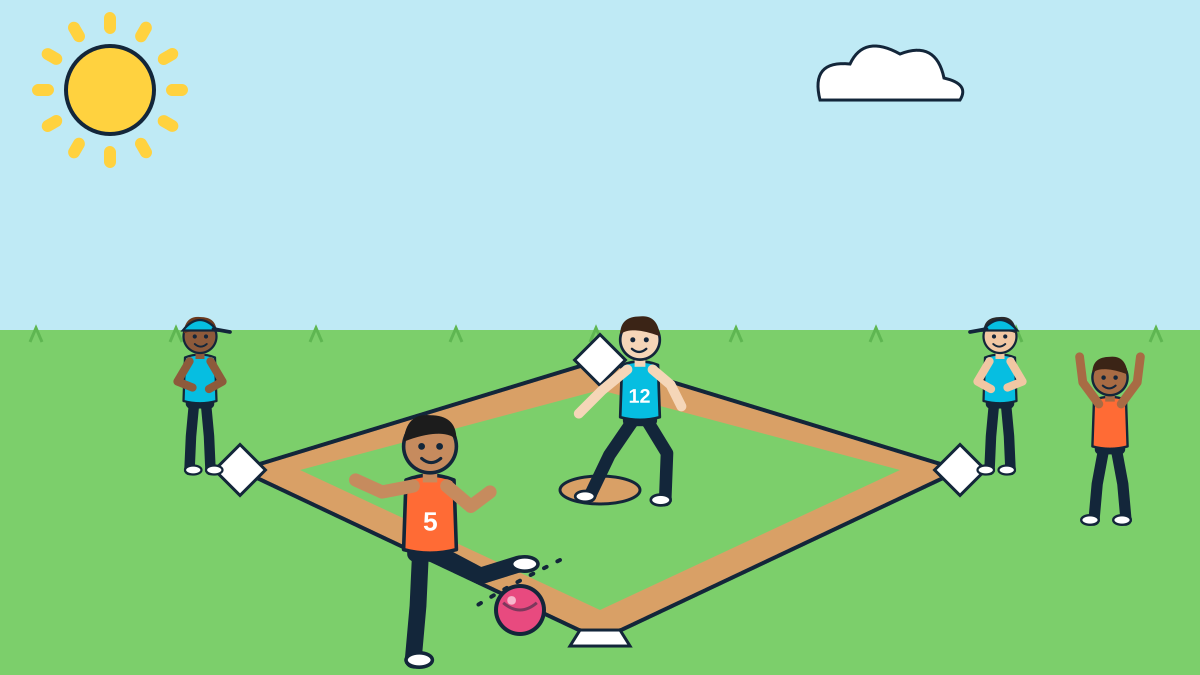
Kickball is baseball's friendlier cousin. Instead of a bat and a hard ball, the pitcher rolls a big rubber ball across the ground and the kicker boots it into the field. Adult kickball leagues have exploded in popularity because nearly everyone played it as a kid, it needs almost no equipment, and it is easy to be decent at. That said, grown-up leagues have rules you probably did not use in the schoolyard. Here is how a typical adult game works.
The field and the teams
Kickball is played on a diamond with home plate and three bases, just like softball. Many leagues play on actual softball fields, while others chalk out a diamond on a grass field. Teams take turns kicking and fielding. A defensive team usually has a pitcher, a catcher, infielders at or near each base, and outfielders, with around 8 to 11 players on the field depending on the league.
Coed leagues typically require a minimum number of women on the field at all times, and many require the kicking order to alternate or to include women at set intervals. If your team is short, you may have to play with fewer fielders or take an automatic out when that spot in the order comes up. Ask your league how this works before game day.
Pitching and kicking
The pitcher rolls the ball towards home plate. In most adult leagues the pitch must roll along the ground, not bounce above a certain height, and must be at a reasonable speed. The kicker stands behind home plate and kicks the ball with the foot or leg. Kicking with any other part of the body usually does not count.
The count works a little like baseball, with some differences:
- Strikes. A pitch that crosses the plate in the strike zone and is not kicked, or a missed kick attempt, is a strike. Three strikes is an out.
- Balls. Pitches outside the strike zone or that bounce too high are balls. Many leagues award a walk after four balls; others skip walks entirely to keep games moving.
- Fouls. A kick that lands outside the foul lines is a foul. Many adult leagues treat a certain number of fouls, often three or four, as an out.
A common adult-league wrinkle is the bunting rule. Plenty of social leagues ban bunting or require the ball to travel past a line before it counts, because a tapped ball tends to produce a clumsy scramble rather than a real play.
How outs happen
Three outs end a half-inning, then the teams swap. The ways a kicker or runner can be out will feel familiar:
| Type of out | What happens |
|---|---|
| Caught fly | A kicked ball caught in the air before it touches the ground. |
| Force out | A fielder holding the ball touches a base the runner is forced to run to before the runner gets there. |
| Tag out | A fielder touches a runner who is off base with the ball in hand. |
| Pegging | A fielder throws the ball and hits a runner who is off base, usually below the shoulders. |
| Strikes or fouls | Three strikes, or the league's foul limit, and the kicker is out. |
| Leaving early | A runner who leaves a base before the ball is kicked is out in most leagues. |
Pegging is the rule that makes adult kickball feel like playground kickball. Most leagues allow it but only below the neck or shoulders. A headshot typically does not count as an out; the runner is usually safe and may be awarded the next base. If a runner deliberately ducks into a throw, many rulebooks still call them out. Some leagues ban pegging altogether for safety, so confirm your league's version.
Running the bases
Runners advance on kicks much like softball. Leading off and stealing are usually not allowed; runners must stay on base until the ball is kicked. On a caught fly, runners have to go back and touch their base before advancing, which is called tagging up. Overthrows are where kickball gets chaotic: when a throw sails past a base, runners may advance at their own risk, though some leagues limit them to one extra base.
A run scores when a runner crosses home plate before the third out. Games usually last a set number of innings, often five to seven, or a time limit, and some leagues have a "mercy rule" that ends a game when one team is far ahead.
Common adult-league rules at a glance
Check these in your league's rulebook
- Number of innings or time limit
- Coed ratio on the field and in the kicking order
- Whether bunting is allowed
- Foul limit before an out
- Pegging rules, including headshots
- Whether walks exist, and how many balls earn one
- Run limits per inning, if any
- Footwear rules (many leagues ban metal cleats)
Tips for your first game
Kick through the middle of the ball, not under it, if you want a line drive rather than an easy pop fly. Aim for gaps between fielders rather than kicking as hard as possible. In the field, keep your eyes on the ball and call for catches loudly so two people do not collide. Wear flat athletic shoes or plastic cleats, stretch before the game (our warm-up guide has a routine), and remember that in social kickball the best play of the night is usually the one everyone laughs about afterwards.
FAQ
Can you throw the ball at a runner in kickball?
In most adult leagues, yes. It is called pegging. A runner hit by a thrown ball while off base is out, but hits to the head or neck usually do not count and the runner is often awarded the base. Some leagues ban pegging entirely, so check.
Is bunting allowed in adult kickball?
Many social leagues ban bunting or define a minimum kick distance, because bunts make for short, awkward plays. Others allow it. It is one of the first things to check in your league's rules.
How many players are on a kickball team?
Leagues commonly field around 8 to 11 players at a time, with a larger roster to cover absences. Coed leagues often require a minimum number of women on the field.
What kind of ball is used?
Most leagues use an inflated rubber playground-style ball about 10 inches across, like the red ones many people remember from school.