A simple warm-up routine for rec league players
A ten-minute dynamic warm-up you can do beside the field, with tweaks for court, field and lane sports.

Heads up: this is general, educational information for recreational players, not medical or professional advice. If you have an injury, a health condition, or pain that does not settle, talk to a qualified health professional before playing.
Most adult rec players arrive straight from a desk, a car or a sofa and go from zero to sprinting in about a minute. That is when pulled hamstrings and tweaked backs happen. A short warm-up raises your body temperature, gets joints moving through the range they will need, and gives your brain a few minutes to switch into game mode. This routine takes about ten minutes, needs no equipment, and can be done beside any field, court or lane.
Why a warm-up helps
A warm-up gradually increases your heart rate and blood flow to working muscles, and it rehearses the movements you are about to do at full speed. For recreational players, the practical benefits are simple: you feel less stiff in the first few minutes, you move better when the game starts, and you give yourself a chance to notice any niggle before it becomes a problem. General sports-medicine guidance widely recommends warming up before exercise, and many injury-prevention programmes for field sports are built around a structured dynamic warm-up.
The ten-minute routine
Do each movement in order. Keep it smooth and controlled, and build up the speed gradually. You should finish feeling warm and slightly out of breath, not tired.
| Phase | Movement | How long |
|---|---|---|
| 1. Raise | Easy jog, or brisk walk with big arm swings, around the field or court | 2 to 3 min |
| 2. Mobilise | Arm circles forward and back; trunk rotations; hip circles | 1 to 2 min |
| 3. Legs | Walking lunges; leg swings front-to-back and side-to-side (hold a fence or partner); walking knee hugs | 2 to 3 min |
| 4. Movement | Side shuffles; carioca (grapevine); backpedal; high knees; butt kicks | 2 min |
| 5. Build | Two or three short runs at gradually increasing speed; a few quick changes of direction | 1 to 2 min |
If you are playing a throwing sport, finish with a few easy throws at short distance before you throw hard. If you are playing a kicking sport, do the same with a few gentle kicks.
Adapting it to your sport
Different rec sports load the body differently, so shift the emphasis to match:
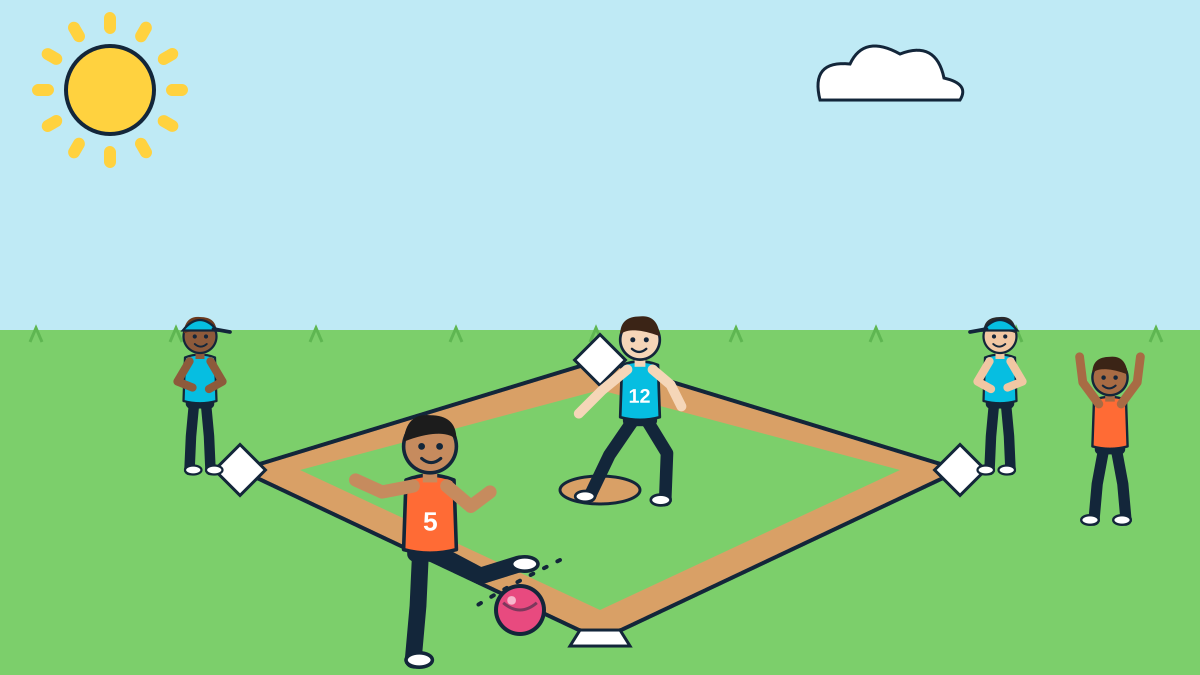
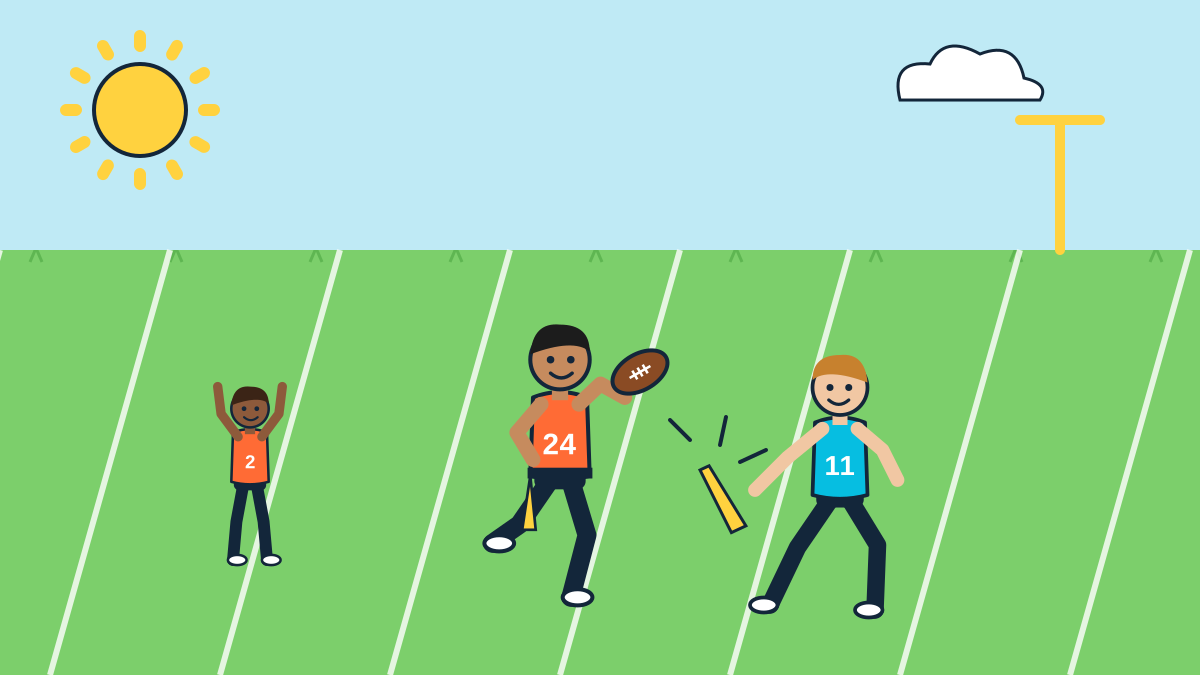
- Kickball, flag football and softball: put extra time into leg swings, lunges and build-up runs, since sprinting from a standstill is the big demand. Our kickball and flag football guides explain how much running to expect.
- Pickleball, volleyball and dodgeball: add more side shuffles and quick direction changes, plus shoulder circles and gentle arm swings for overhead movements.
- Cornhole and bowling: keep it shorter. Focus on arm circles, trunk rotations, gentle lunges and a few practice swings. Your back and throwing shoulder will thank you by frame ten.
Common warm-up mistakes
- Skipping it because you are late. Even three minutes of the raise and legs phases is better than nothing.
- Going too hard. A warm-up should not tire you out before the game starts.
- Only doing long, held stretches. Many coaches save these for after, and focus on movement before.
- Warming up, then sitting for twenty minutes. If your game is delayed, do a quick top-up before you go on.
- Ignoring pain. Stiffness that eases as you warm up is normal. Sharp or worsening pain is not. Stop and get it checked.
Cooling down afterwards
After the game, spend five minutes walking and doing gentle stretches for the muscles you used most: calves, hamstrings, quads, hips and shoulders. Hold each stretch comfortably, without bouncing. Drink some water and put on a warm layer. It is also a good time to chat with your team, so the cooldown and the social can happen at the same time.
Making it a team habit
Warm-ups are easier when everyone does them. Captains can lead a quick routine at the start of each game, which also helps new players feel part of the team and gives everyone a moment to get their heads in the game. If your team arrives in dribs and drabs, set a meeting time ten minutes before kickoff and start with whoever is there. Add the routine to your game-day checklist, and after a few weeks it will feel as normal as tying your shoes.
FAQ
Should I do static stretches before a game?
Many coaches favour dynamic movements before playing and save long, held stretches for after. Short static stretches are unlikely to hurt, but a dynamic warm-up does a better job of preparing you to move quickly.
How long should a warm-up be?
About 8 to 12 minutes is a common target for recreational games. The aim is to feel warm and loose, not tired.
Do I need to warm up for bowling or cornhole?
A shorter warm-up still helps. A few minutes of gentle arm circles, trunk rotations and light lunges prepares the shoulder, back and legs you will use for every throw.
What if I feel pain during a warm-up?
Stop the movement that hurts. Pain is a signal to rest and, if it does not settle, to get advice from a qualified health professional before playing.