Dodgeball rules explained for adult leagues
The opening rush, catches, headshots and stalling rules: how grown-up dodgeball keeps the chaos fair.
Dodgeball is gloriously simple: throw balls at the other team, avoid getting hit, and be the last team standing. Adult leagues have kept that spirit but added rules to keep games fair and safe, especially around catches, headshots and players who hold on to balls forever. Rules vary between leagues and organisations more than in most sports, so treat this as a guide to the common approach and read your league's rules before the first game.
The court and equipment
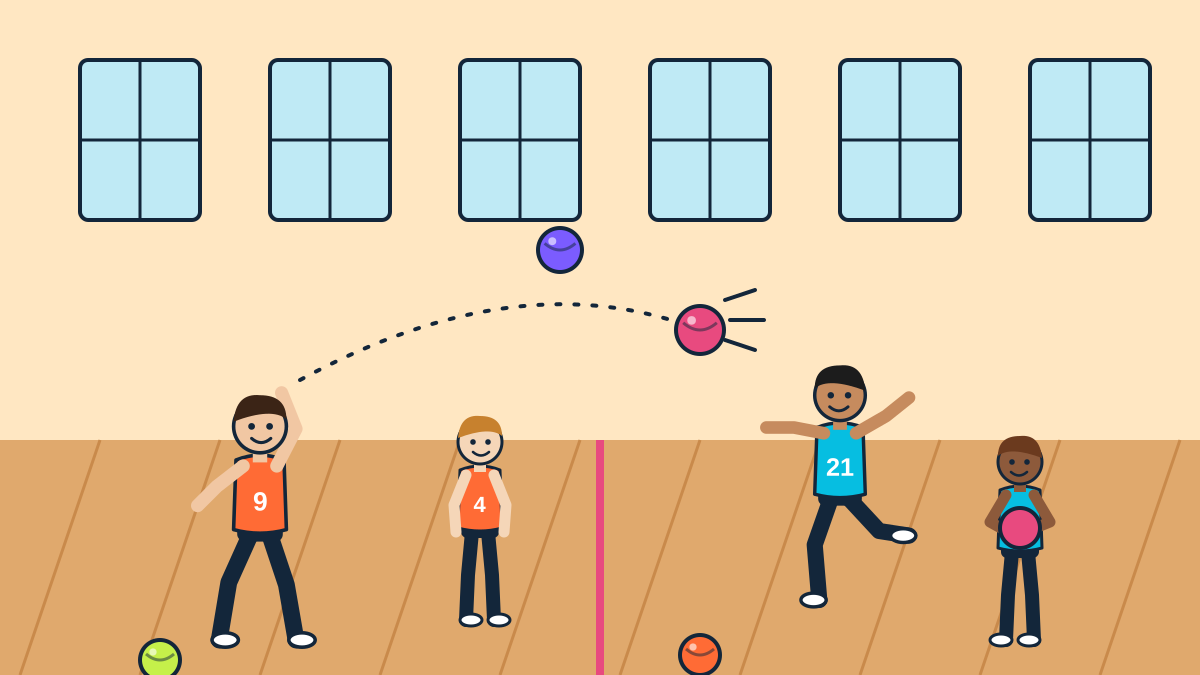
Dodgeball is usually played indoors on a basketball or volleyball court split in half by a centre line. Each team has its own half and must stay on it. There is often an attack line a few metres back from the centre line on each side, which matters for the opening rush and sometimes for where you can throw from.
Adult social leagues commonly use six players per side on the court and six balls, though some use more or fewer depending on court size. The balls are typically soft foam or rubber-coated foam, often called no-sting balls, which hurt far less than the rubber playground balls of your childhood.
Starting a game: the opening rush
At the start of each game the balls are lined up along the centre line. Players wait behind their own back line, and on the referee's signal both teams sprint forward to grab balls. The usual rule is that each team can only claim the balls on their half of the centre line, or a set number of balls, and anything taken must be brought back behind the attack line before it can be thrown. This stops people firing at point-blank range during the scramble.
The rush is the most injury-prone moment of the game, so many leagues ask players to keep low and avoid diving. If sprinting at full speed towards another adult sprinting at you sounds like a bad idea, it is completely fine to hang back and let a teammate go.
How you get out
| Situation | Result in most leagues |
|---|---|
| You are hit by a live thrown ball on the fly | You are out. |
| Your throw is caught cleanly by an opponent | You are out and one of their out players returns. |
| You block a throw with a held ball and drop your ball | You are out. |
| You step over the centre line or out of bounds | You are out. |
| You are hit in the head | Varies: often you stay in, and the thrower may be penalised. |
| A ball bounces off the floor or wall before hitting you | Not out; the ball is dead. |
A ball stays live from the moment it leaves the thrower's hand until it touches the floor, a wall, the ceiling, or an object like a basketball hoop. Hits by a dead ball do not count. If a ball hits one player and then another before touching anything, rules differ: some leagues say both are out, others only the first.
Catches change everything
Catching is the most powerful move in dodgeball. A clean catch usually does two things at once: it gets the thrower out, and it brings one of your eliminated teammates back onto the court. Most leagues bring players back in the order they were eliminated, so keep an orderly line on the sideline.
A catch only counts if you control the ball before it touches the ground or anything out of bounds. If a ball bounces off a teammate and you catch it before it hits the floor, many rulebooks still count it as a catch and save your teammate as well.
Headshots and safety
Headshot rules are where leagues differ most. Common versions include:
- A headshot does not count as an out, and play continues.
- A deliberate or hard headshot puts the thrower out instead.
- If the player was ducking, dodging low or otherwise moved their head into the path of the ball, the hit counts as a normal out.
Whatever your league's version, aim below the shoulders. It is safer, it is what referees expect, and it keeps the game friendly enough that people come back next season.
Stalling and the shot clock
A team holding every ball can freeze the game. To stop that, many leagues use a stalling rule. Typical versions give a team a set number of seconds to throw once it controls all the balls, or require the team with more players to keep attacking. If the count runs out, the balls may be awarded to the other team. Games also usually have a time limit; when time runs out, the team with more players left often wins, or the game is recorded as a draw.
Beginner strategy
Five habits that keep you in the game
- Stay near the back of your half when you do not have a ball; distance buys reaction time.
- Hold a ball when you can. It lets you block, and it means the other team has one fewer to throw.
- Throw together. Coordinated throws at one target are much harder to dodge or catch.
- Watch the thrower's arm, not the ball in their hand.
- If a soft lob is coming at you, try to catch it. Catches win games.
Most of all, dodgeball is a game about being ridiculous together. Call your own outs honestly, shake hands at the end, and save the heroics for the story you tell at the bar.
FAQ
Are headshots allowed in adult dodgeball?
It depends on the league. Many social leagues say a headshot does not make the victim out, and some penalise the thrower if the shot was deliberate or thrown hard. A player who ducks into a ball is usually still out.
What happens if you catch a dodgeball?
In most rulebooks, a clean catch puts the thrower out and lets one of your eliminated teammates come back in, usually in the order they went out.
Can you block a throw with a ball you are holding?
Usually yes. Blocking with a held ball is legal, but if the ball you are holding gets knocked out of your hands by the throw, you are typically out.
What kind of balls do adult leagues use?
Most social leagues use soft foam or rubber-coated foam balls, sometimes called no-sting balls, around 7 to 8.5 inches across, to reduce injuries.