Joining a rec league as a free agent: what to expect
Signing up solo is normal. Here is how free agent placement works and how to go from stranger to teammate by week two.
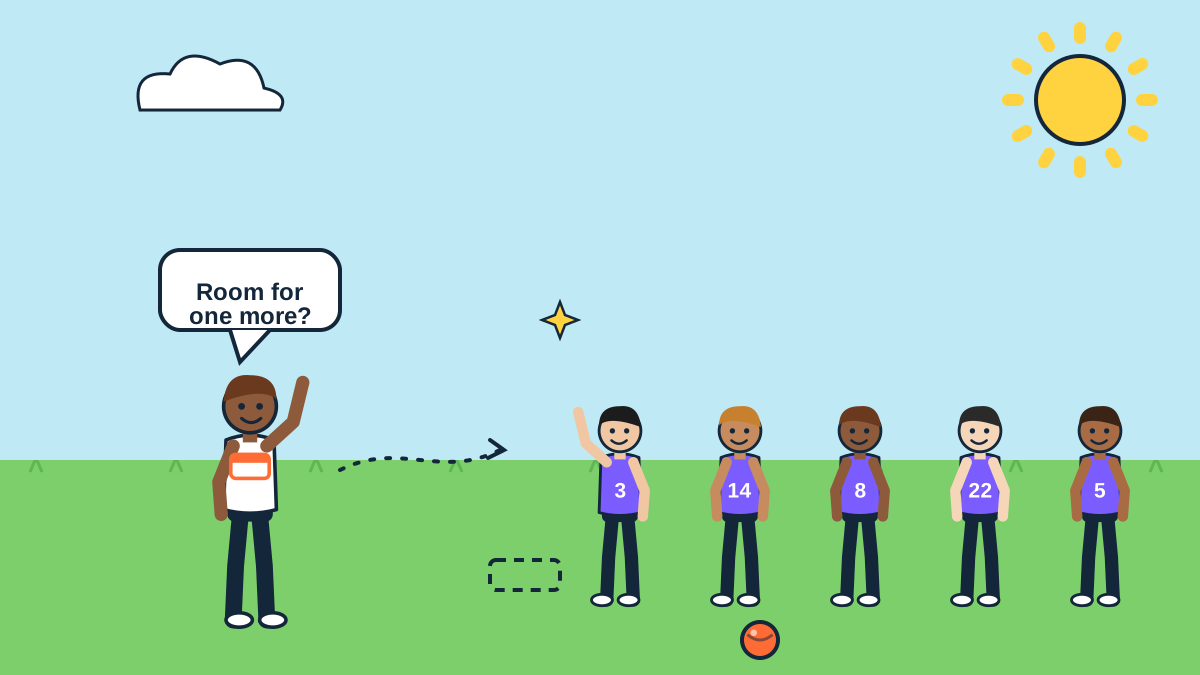
Maybe you just moved to a new city. Maybe your friends do not play sports. Maybe you just want to meet people who are not your coworkers. Whatever the reason, you do not need a ready-made team to join an adult rec league. Most leagues accept individual players, usually called free agents, and place them on teams. It is one of the best ways to build a social life as an adult, and it is far less awkward than it sounds.
How free agent registration usually works
When you register as an individual, the league needs to put you somewhere. There are three common approaches:
| Approach | How it works | What it feels like |
|---|---|---|
| Free agent team | The league groups individual sign-ups into a brand-new team. | Everyone is new, so nobody is the outsider. Often the friendliest option. |
| Placed on a short team | You fill a gap on an existing team that needs more players. | The team already knows each other, but they signed up needing you. |
| Sub list | You are on a list of players teams can call when they are short. | Flexible and low commitment, but you play less regularly. |
Registration forms often ask about your experience, preferred position and availability. Answer honestly. If you say you are "competitive" to sound impressive, you may end up on a team that is more intense than you want.
Before the first game
Once you are placed, the league or team captain will usually send the schedule, venue details and team colour. A few simple things make your first week easier:
- Reply to the captain's first message so they know you exist and are coming.
- Join the team group chat if there is one, and introduce yourself in one line.
- Check what colour shirt to wear, and whether the league provides one.
- Read the league's rules, especially anything unusual. Our explainers for kickball, dodgeball and other sports cover the basics.
- Pack your bag the night before. Our game-day bag checklist helps.
- Plan to arrive 10 to 15 minutes early, so you have time to find the right field and say hello.
Fitting in on game day
The first game is where most of the nerves live. The good news is that rec teams are generally delighted to have enough players, so you start with goodwill. To turn that into friendship:
- Introduce yourself to everyone. A name, a handshake or a wave, and "I am the new free agent" is plenty.
- Ask where they want you. Offering to play wherever you are needed shows you are a team player.
- Be encouraging. Cheering for others is the fastest way to become part of a team, whatever your skill level.
- Admit what you do not know. "I have never played this before, how does the rush work?" is a perfectly good opening line.
- Stay for the social. If the team goes for food or drinks afterwards, go at least once, even for a short while. That is where names become friends.
Being the reliable one
Captains will tell you that the most valuable player on a rec team is rarely the most talented. It is the person who shows up every week and replies to messages. Reliability matters most in coed leagues with ratio rules, where one missing player can mean a forfeit or an automatic out. If you cannot make a game, tell the captain as early as possible so they can find a sub. That single habit will make you a welcome teammate for as long as you want to play.
When it is not working
Occasionally the fit is wrong: the team is far more competitive than you expected, the schedule clashes with your life, or the atmosphere is not friendly. Talk to the captain first; problems are often simple to fix. If not, contact the league organiser. Many leagues can move you to another team or division, especially early in the season. And if you finish the season without clicking, try a different sport or league next time. The first team does not have to be the forever team.
After your first season
Many free agents return the next season with the same team, which is how most rec teams are born. Others bring a friend, or become the captain themselves. If you enjoyed it, register early for the next season, because returning teams often get first choice of time slots. And if you want to go one step further, our guide to captaining a rec team covers what the job actually involves.
FAQ
Is it weird to join a rec league alone?
Not at all. Many leagues have a large share of individual sign-ups, and some teams are built entirely from free agents. It is one of the most common ways adults make new friends after moving.
Do free agents pay the same as team players?
It depends on the league. Individual fees are often similar to a per-person share of a team fee, and sometimes slightly higher. Check what the fee includes.
What if I am placed on a team that is too competitive?
Tell the league organiser early. Most would rather move you to a better-fitting team or division than lose you from the league.
Can I bring a friend as a free agent?
Many leagues let you register as a pair or small group and will try to keep you together on a team. Mention it when you sign up.