Flag football rules for beginners
Flags instead of tackles, no-run zones, rushing rules and how scoring works in a typical adult league.
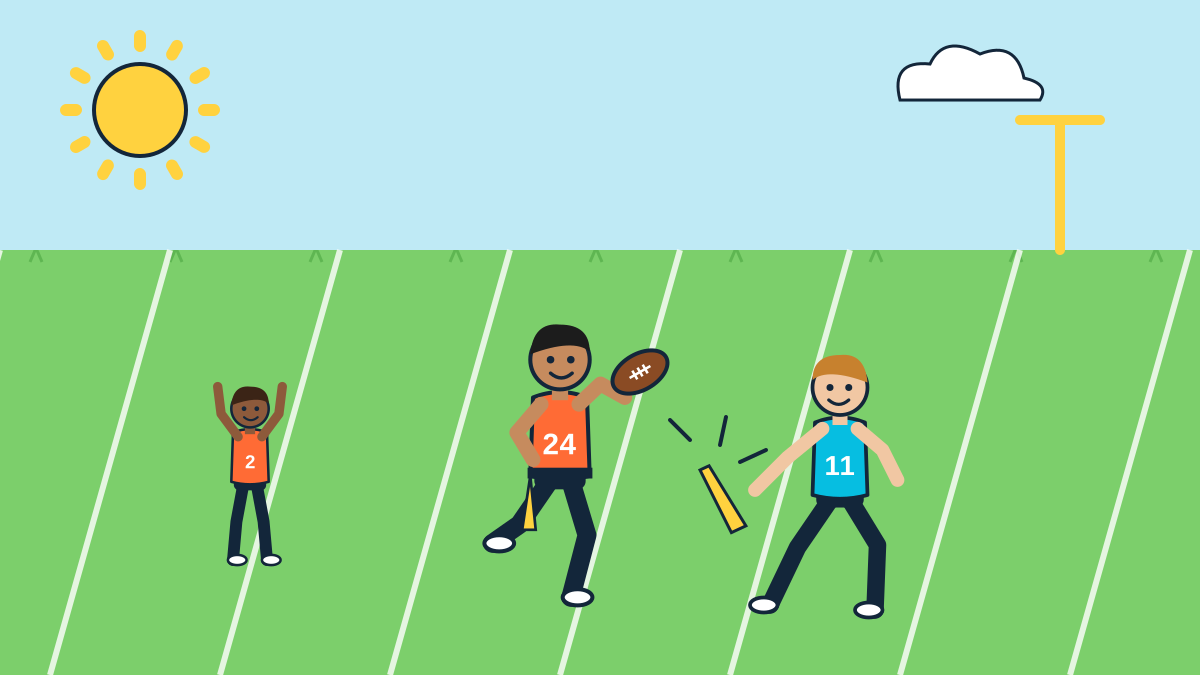
Flag football keeps the parts of American football most people enjoy, like the passing, the trick plays and the end-zone celebrations, and removes the tackling. Instead of bringing the ball carrier to the ground, defenders pull a flag from the runner's belt. It is one of the most popular adult rec sports because it rewards speed and teamwork more than size. Rules differ across leagues and organisations, so this guide explains the most common framework and points out the places your league may differ.
Teams, field and equipment
Adult flag leagues commonly play five-on-five or seven-on-seven, and some play eight or nine a side on larger fields. Fields are usually shorter and narrower than a regulation football field. A typical setup has two end zones and a midfield line, with "no-run zones" marked a few yards in front of each end zone and the midfield line.
Every player wears a belt with two or three flags attached at the hips (and sometimes the back). The flags must hang freely: tucking them in, tying them or covering them with a loose shirt is a penalty. Most leagues supply a ball, often a slightly smaller size than a full-size football, and require non-metal cleats or athletic shoes.
Downs and moving the ball
Instead of needing ten yards for a first down, many flag leagues give the offence a set number of plays, often four, to cross midfield. Once it crosses, it gets another set of plays to score. If it fails, the other team takes over at its own starting spot, not where the ball ended up.
Plays start with a snap from the centre to the quarterback. The quarterback can hand off, pitch or pass. A play ends when the ball carrier's flag is pulled, they step out of bounds, a pass falls incomplete, or they score.
No-run zones are a signature flag-football rule. In the few yards before midfield and the end zone, the offence has to pass. It is there to stop teams simply bulldozing the last few yards with running plays and to reward good passing.
Rushing the quarterback
Without offensive linemen, a rule is needed to give the quarterback time. The most common approach:
- Defenders who want to rush the passer must start a set distance back from the line of scrimmage, often around seven yards, marked by a cone or the referee.
- Only rushers who start from that line can cross the line of scrimmage before the ball is handed off or passed.
- Some leagues also use a pass clock (for example a few seconds) instead of, or as well as, a rush.
In many leagues the quarterback cannot run the ball straight past the line unless the defence rushes or there has been a handoff. Others let the quarterback run freely. Ask before your first game, because it changes how you defend.
Scoring
| Score | Typical value | Notes |
|---|---|---|
| Touchdown | 6 points | The ball carrier crosses the goal line with their flags still on. |
| Extra point, short | 1 point | A play from a short distance, often around 5 yards. |
| Extra point, long | 2 points | A play from further back, often 10 to 12 yards. |
| Safety | 2 points | The ball carrier is downed in their own end zone. |
| Interception return | 6 points (or 2 on a conversion) | Leagues differ on whether and how returns score. |
Kickoffs and punts are usually replaced by simply giving the ball to the other team at a set spot. Some leagues allow an announced punt where the ball is just moved.
Common penalties
- Flag guarding: using your hands, arms or the ball to stop a defender reaching your flag.
- Contact: blocking, holding, pushing or tackling. Screening by simply standing in a route is often legal; initiating contact is not.
- Offside or early rush: crossing the line of scrimmage before the snap, or rushing from too close.
- Pass interference: contact with a receiver (or defender) that stops them catching the ball.
- Illegal flag belt: flags tucked, tied or missing at the snap.
- Stripping: trying to take the ball out of the carrier's hands.
Tips for your first season
On defence, aim for the flag, not the player: watch the runner's hips, stay low, and reach for the flag as they pass. Chasing a player from behind rarely works; cutting off their angle does. On offence, run crisp routes and look back for the ball early. Short passes that move the chains are more reliable than long bombs. Warm up properly before kickoff, because quick changes of direction are hard on cold hamstrings, and our warm-up routine is a good start. Finally, learn your league's no-run zones and rushing rules before the first game, because they decide more drives than any trick play.
FAQ
Is there contact in flag football?
In most recreational leagues, blocking and tackling are not allowed. Incidental contact happens, but deliberate contact, including pushing, holding or stiff-arming, is a penalty.
Can the quarterback run in flag football?
In many leagues the quarterback cannot run the ball directly past the line of scrimmage unless there has been a handoff or the defence has rushed. Some leagues allow QB runs freely. It is a key rule to check.
What happens if my flag falls off by itself?
In many leagues, if your flag falls off without being pulled, you are down when a defender touches you with one hand, rather than when a flag is pulled.
What shoes should I wear?
Molded rubber or plastic cleats are usually fine on grass and turf. Metal cleats are commonly banned. Check your venue's rules, especially on artificial turf.